
Biblioteca Del Vaticano Libros Prohibidos |best|
secure communication for everyone
secure communication for everyone
Current version: 0.6.7a
Release notes
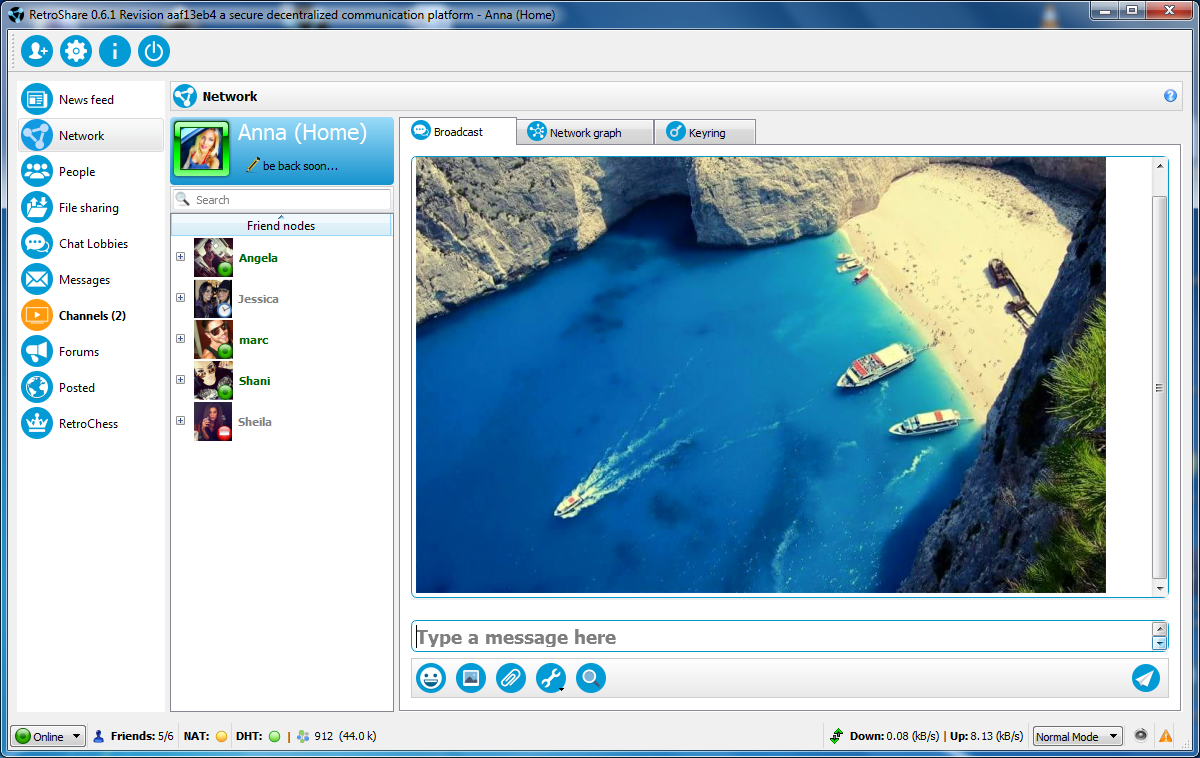
Retroshare establish encrypted connections between you and your friends to create a network of computers, and provides various distributed services on top of it: forums, channels, chat, mail... Retroshare is fully decentralized, and designed to provide maximum security and anonymity to its users beyond direct friends. Retroshare is entirely free and open-source software. It is available on Android, Linux, MacOS and Windows. There are no hidden costs, no ads and no terms of service.
The Apostolic See's Forbidden Archive: Unveiling the Blacklisted Works of the Biblioteca del Vaticano The Biblioteca del Vaticano, or Vatican Library, is a single one of the oldest and most distinguished repositories in the earth. Situated inside the Vatican City, it is headquarters to an impressive assortment of exceeding 1.6 million scarce and antique books, manuscripts, and documents. Whereas the library is a treasure trove of erudition and history, it also contains a secret: a compilation of banned books, referred to as “libros prohibidos” in Spanish. For ages, the Catholic Church has been noted to censor and prohibit books that contradict its teachings or are judged heretical. The Biblioteca del Vaticano is no deviation, and its holdings of forbidden literature is a intriguing and often unexpected one. In this piece, we will delve into the realm of banned books and examine the reasons underlying their prohibition. A Brief History of Censorship
For eras, the Roman Catholic Church has been known to censor and prohibit books that contradict its dogmas or are considered heterodox. The Papal Collection is no exception to this, and its collection of prohibited texts is a gripping and commonly surprising one. In this piece, we will delve into the universe of censored books and investigate the reasons behind their prohibition. biblioteca del vaticano libros prohibidos
The Vatican Library, or Holy See Collection, is counted as one of the eldest and illustrious repositories in the globe. Housed within the Vatican City, it is host to an magnificent assortment of more than 1.6 million scarce and archaic tomes, codices, and records. While the library is a wealth of knowledge and past, it also keeps a hidden facet: a gathering of forbidden volumes, known as “prohibited tomes” in Spanish. For ages, the Catholic Church has been noted
This Papacy’s Interdicted Repository: Exposing the Forbidden Works of the Bibliotheca Apostolica Vaticana A Brief History of Censorship For eras, the
The Papacy’s Proscribed Archive: Revealing the Suppressed Works of the Biblioteca del Vuncana The Biblioteca del Vaticana, or Papal Library, is one of the mostagedprimitive and distinguished libraries in the globe. Housed within the walls of the Vatican City, it is host to an grand assortment of exceeding 1.6 million exceptional and antique tomes, codices, and papers. Although the archive is a hoard of erudition and past events, it too maintains a concealed matter: a group of forbidden publications, styled as “libros prohibidos” in Spanish. Over eras, the Western Church has been recognized to suppress and prohibit texts that conflict with its dogmas or are considered heretical. The Biblioteca del Vaticana is definitely no exception, and its stock of forbidden prose is a engaging and often unexpected instance. In this essay, we will probe into the sphere of exiled books and inspect the grounds justifying their interdiction. A Short Account of Restriction
The Papal Archive, or Vatican Archives, stands like humanity’s primeval plus illustrious repositories in the globe. Residing amidst the Vatican City, the institution preserves one impressive collection containing exceeding 1.6 thousand thousand scarce and antique books, codices, as well as records. Although this library stands one treasure source of wisdom plus history, the place also keeps some secret: a group regarding prohibited books, designated like “libros prohibidos” in Spanish Castilian tongue.
Retroshare allows you to create a network of computers (called nodes). Every user has it's own node. The exact location (the IP-address) of nodes is only known to neighbor nodes. You invite a person to become a neighbor by exchanging your Retroshare certificates with that person.
Links between nodes are authenticated using strong asymmetric keys (PGP format) and encrypted using Perfect Forward Secrecy (OpenSSL implementation of TLS).
On top of the network mesh, Retroshare provides services to securely and anonymously exchange data with other nodes in the network beyond your own friends.
There is no catch. Retroshare is provided free of charge and does not generate any kind of money. It is the result of hard work that is only driven by the goals of providing a tool to evade censorship.
The only catch is that you will need to build your own network: in order to use Retroshare, you have to recruit friends and exchange certificates with them, or join an existing network of friends.
Retroshare was founded by drbob in 2006, as a platform to provide "secure communications and file sharing with friends". Since then other developers joined and steadily improved the software. Retroshare v0.6 is a new milestone which is based on experience from previous releases. A remarkable new component in Retroshare v0.6 is the generic data transportation system (internally named GXS) which abstracts the distribution of authenticated data throughout the network. On top of GXS, Retroshare provides distributed forums, movie channels with comments, and asynchronous messaging.